Explain This: The SonicWall SMA1000 Bug Is an Edge-Control Problem
SonicWall's SMA1000 zero-days are not just another patch alert. They show why remote-access appliances need ownership, evidence, and a short response clock.
The useful lesson in the SonicWall SMA1000 advisory is not just that teams need to patch quickly.
They do. But that is the easy sentence.
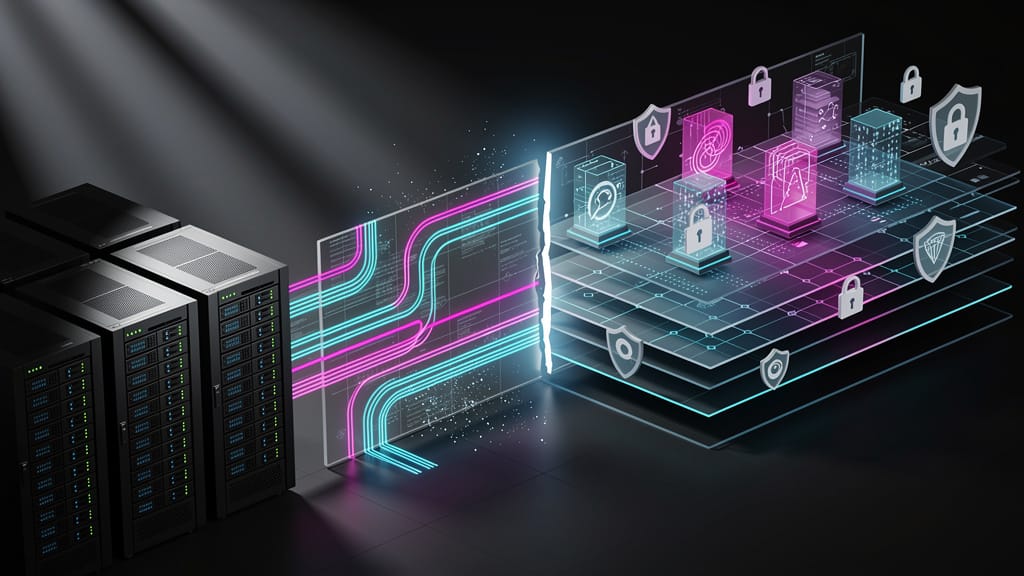
The harder point is that remote-access appliances are no longer background infrastructure. They are identity gates, administrative consoles, session brokers, and evidence sources. When one of them lands in the known-exploited bucket, the response has to treat it like a control-plane event.
What it is
SonicWall disclosed two SMA1000 appliance vulnerabilities, CVE-2026-15409 and CVE-2026-15410.
CVE-2026-15409 is a server-side request forgery issue in the SMA1000 Appliance Work Place interface. NVD describes it as a flaw that could let a remote unauthenticated attacker cause the appliance to make requests to an unintended location.
CVE-2026-15410 is a code-injection issue in the SMA1000 Appliance Management Console. NVD describes it as post-authentication and tied to specific conditions, where a remote authenticated administrator could potentially execute operating-system commands.
CISA added both CVEs to the Known Exploited Vulnerabilities catalog on July 14, 2026. The due date listed for covered federal systems is July 17, 2026.
That short window is the signal.
Why it matters
An SMA appliance is not only a box at the edge. It is a decision point.
It decides who gets remote access. It may hold session history. It touches authentication flows.
It sits close to privileged administration. It can also become the place where incident responders either find useful evidence or discover that nobody had logging ownership.
That is why this should not be assigned as a generic patch ticket and forgotten.
Patch management fixes the known software condition. It does not answer the operational questions that follow exploitation.
Who accessed the appliance before the patch?
Which administrator accounts touched the management console?
Were there unusual outbound requests from the appliance?
Do VPN, identity-provider, firewall, and endpoint logs tell the same story?
If those answers are not available, the real vulnerability is bigger than SonicWall.
The compliance problem underneath the security problem
CISA's KEV entry tells agencies to apply vendor mitigations and align with BOD 26-04. It also points to forensic triage expectations.
That matters for private organizations too, even when they are not directly bound by the directive.
Boards, insurers, customers, regulators, and outside counsel increasingly ask the same basic question after an edge-device incident: can you prove what happened?
A team that says "we patched" has completed one task.
A team that can show asset exposure, patch timing, account review, log coverage, and escalation decisions has built a defensible record.
That is the difference between response theater and response evidence.
What to do this week
- Confirm whether any SMA1000 appliance is deployed, exposed, managed by a vendor, or inherited through an acquisition.
- Apply SonicWall's mitigation or patch guidance and record the exact time, owner, version, and system scope.
- Pull appliance, identity-provider, firewall, and endpoint logs for the relevant window before they age out.
- Review administrator accounts on the appliance, including dormant users, shared accounts, service accounts, and vendor access.
- Look for unexpected outbound requests, unusual management-console activity, new configuration changes, or authentication anomalies.
- Write a one-page response memo while the facts are fresh. Include what was exposed, what changed, what evidence was reviewed, and what still cannot be proven.
The operator takeaway
The edge is not just a perimeter anymore. It is where identity, privileged access, vendor trust, and incident evidence intersect.
That means the owner cannot be "networking" in one column and "security" in another column with nobody accountable for the full story.
For Karla's clients, this is the useful frame: every remote-access appliance needs an owner, an evidence plan, and a response clock. If the organization cannot name all three before the next advisory, it is already late.